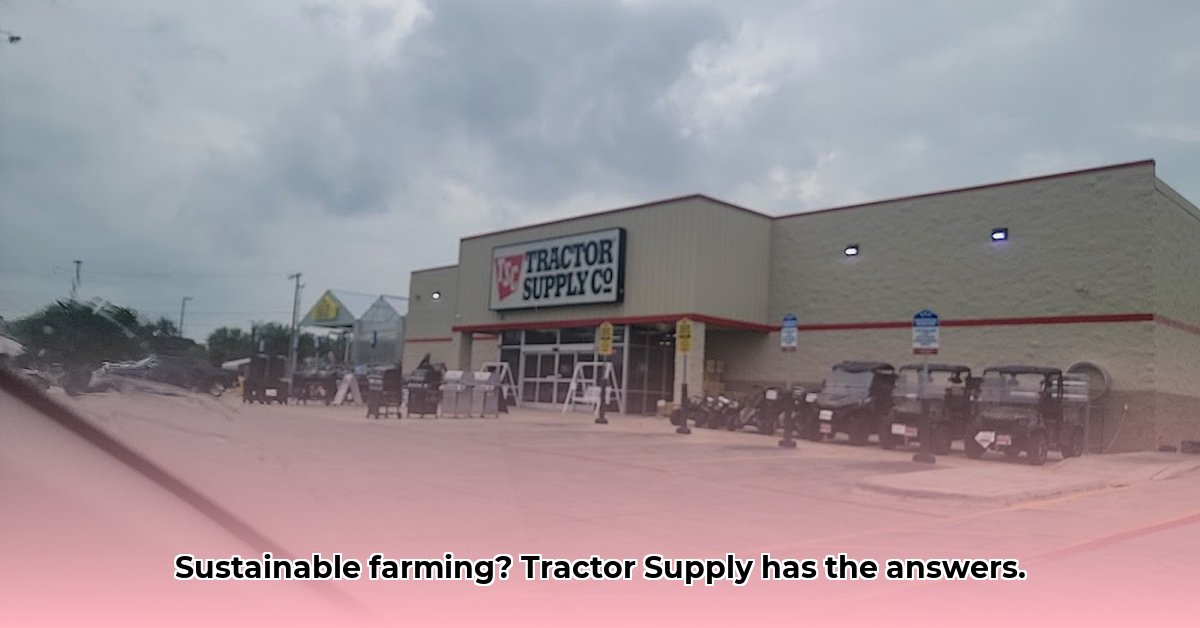
Tractor Supply's presence in Buffalo, Texas offers convenient access to agricultural supplies for local farmers. However, its role in promoting sustainable farming practices requires further examination. This article explores Tractor Supply's current contribution, identifies potential improvements, and outlines actionable steps for all stakeholders to foster a more sustainable agricultural future in the region. For similar stores in other areas, check out this example.
Assessing Tractor Supply's Current Impact
The single Tractor Supply store in Buffalo, while conveniently located near Jewett, Donie, and Concord, serves a limited geographical area. Its accessibility is a positive, but its overall impact on the broader region's sustainable agriculture practices remains unclear. This lack of clarity stems from a critical knowledge gap: a comprehensive understanding of the store's current inventory of sustainable agricultural products is needed.
The Sustainability Question Mark: A Detailed Inventory Needed
A detailed assessment of Tractor Supply's stock is crucial. Do they offer organic seeds? What about water-efficient irrigation systems, drip irrigation, and other water-conserving tools? The absence of readily available data on the store's commitment to sustainable products hinders a fair assessment of its current contribution. This lack of transparency makes it difficult to gauge the extent to which the store currently supports sustainable farming practices in the community. This is a critical first step in determining how best to improve their offerings.
Unlocking Potential: Community Engagement and Collaboration
Despite the current uncertainties, Tractor Supply's strategic location presents significant opportunities to enhance sustainable practices in the Buffalo area. Its central position makes it ideally suited to become a hub for education and resources on eco-friendly farming.
Building a Better Future: The Power of Partnerships
Imagine workshops focusing on water conservation, soil improvement techniques, and organic farming methods hosted at or in partnership with Tractor Supply. Envision collaborations with local experts and the county’s agricultural extension office; farmer support groups sharing best practices; and the store providing a platform for disseminating vital information. The possibilities for community engagement are substantial, leading to a more sustainable approach to agriculture in the region.
Actionable Steps: A Collaborative Approach
Real progress towards sustainable farming in Buffalo requires a concerted effort from all stakeholders: Tractor Supply, local farmers, government agencies, and NGOs.
1. For Tractor Supply:
- Short-Term (Within 1 Year): Conduct a detailed inventory of existing sustainable products; survey local farmers to identify their specific needs; and analyze the data to pinpoint gaps in current provision.
- Long-Term (3-5 Years): Expand the product line to include a wider variety of sustainable options (organic seeds, water-efficient irrigation systems, etc.); partner with local organizations to provide educational programs and workshops; and actively engage with the community through events and workshops focused on sustainable farming best practices.
2. For Farmers in the Buffalo Area:
- Short-Term: Explore Tractor Supply’s current offerings; consider group purchasing to reduce costs.
- Long-Term: Communicate specific needs to Tractor Supply; participate in workshops and training programs.
3. For Local Government and NGOs:
- Short-Term: Offer financial incentives for sustainable farming practices; fund educational programs.
- Long-Term: Invest in supporting infrastructure; advocate for policies that promote sustainable agriculture; and foster collaborative partnerships.
Conclusion: A Shared Vision for Sustainable Agriculture
The future of sustainable agriculture in Buffalo, Texas, hinges on collaboration. While Tractor Supply's potential contribution is significant, a more profound understanding of their current offerings, coupled with active engagement from all stakeholders, is needed to create a thriving sustainable farming ecosystem. Further investigation and a united commitment to implementing the actionable strategies outlined above will be critical to achieving this vital goal. The opportunity to transform the region's agricultural practices is within reach, requiring only a collective commitment to sustainable solutions. Let's work together to make Buffalo, Texas, a leader in sustainable agriculture.